A Celestial Tradition Returns
Each year, as spring settles in and the nights grow softer and clearer, skywatchers are treated to one of the oldest recorded meteor showers—the Lyrid meteor shower. Known for its swift, luminous streaks across the sky, the Lyrids have fascinated observers for more than 2,500 years. Historical records from ancient civilizations describe nights when “stars fell like rain,” capturing the same sense of awe that modern viewers experience today. Despite advances in science and technology, the simple act of watching meteors blaze through the night sky remains deeply moving and universally captivating.
Origins in a Comet’s Ancient Path
The Lyrids originate from debris left behind by Comet Thatcher, a long-period comet that takes roughly 415 years to orbit the Sun. As the comet travels through space, it sheds tiny particles of dust and rock. When Earth crosses this trail each April, these particles enter the atmosphere at tremendous speeds, igniting due to friction and creating the brilliant streaks we call meteors. Though the comet itself is rarely visible from Earth, its presence is felt annually through this celestial display, offering a rare connection between our planet and a distant cosmic traveler.
What Makes the Lyrids Unique
While the Lyrids may not produce the highest number of meteors compared to other annual showers, they hold a distinct charm. Under ideal conditions, observers can typically see between 10 and 20 meteors per hour. However, what sets the Lyrids apart is their unpredictability. There have been years when the shower unexpectedly intensified, producing spectacular outbursts of over 100 meteors per hour. This element of surprise keeps astronomers and enthusiasts eagerly anticipating each year’s display, knowing that no two experiences are exactly alike.
Finding the Radiant in the Sky
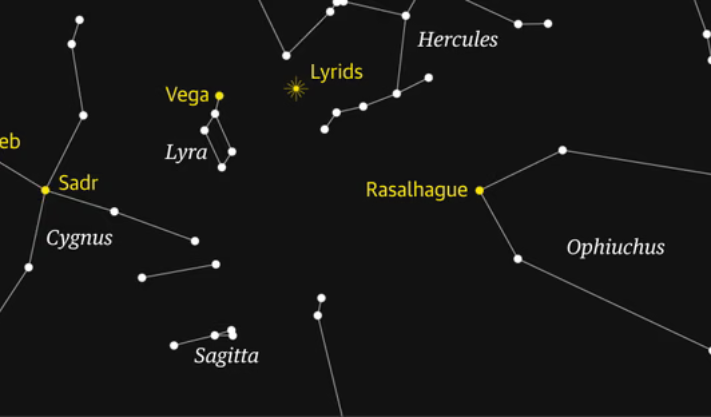
The meteors appear to originate from the constellation Lyra, which gives the shower its name. Within Lyra lies the bright star Vega, one of the most prominent stars visible in the night sky. Although meteors can streak across any part of the sky, tracing their paths backward often leads to this radiant point. For observers, locating Vega can provide a helpful reference when scanning the sky, especially in areas with minimal light pollution.
Best Viewing Conditions and Timing
The Lyrid meteor shower typically peaks in the latter half of April, with the best viewing times occurring during the pre-dawn hours. At this time, the part of Earth you are on is facing forward into the stream of cosmic debris, increasing the likelihood of meteor sightings. Clear skies, low humidity, and minimal artificial lighting significantly enhance visibility. While telescopes and binoculars are not necessary—meteors move too quickly for such instruments—a comfortable viewing spot and patience are essential. Allowing your eyes to adjust to the darkness for at least 20 minutes can make a noticeable difference in what you are able to see.
A Shared Global Experience
One of the most remarkable aspects of the Lyrid meteor shower is its accessibility. Unlike some astronomical events that are visible only in specific regions, the Lyrids can be observed from nearly anywhere in the world. Whether you are in a busy city or a quiet rural area, the opportunity to witness this phenomenon is widely available. This shared experience connects people across cultures and continents, reminding us that the night sky is a universal canvas that belongs to everyone.
The Science Behind the Streaks
Meteors from the Lyrid shower travel at speeds of up to 49 kilometers per second as they enter Earth’s atmosphere. This immense velocity generates intense heat due to friction with atmospheric particles, causing the meteoroids to glow and disintegrate. The resulting streaks of light can vary in brightness and duration, with some appearing as quick flashes and others leaving glowing trails that linger briefly. Occasionally, larger fragments produce fireballs—exceptionally bright meteors that can momentarily illuminate the surrounding sky. These rare occurrences add an extra layer of excitement to the viewing experience.
Historical and Cultural Perspectives
The Lyrid meteor shower has been observed and recorded for millennia, making it one of the oldest known astronomical events. Ancient Chinese records from 687 BCE describe a dramatic display of falling stars, highlighting the long-standing human fascination with celestial phenomena. Across cultures, meteor showers have been interpreted in various ways—omens, messages from the heavens, or symbols of change. Today, while science provides a clear explanation for these events, the sense of wonder they inspire remains unchanged.
A Moment of Reflection in a Busy World
In an era dominated by screens and constant connectivity, the Lyrid meteor shower offers a rare opportunity to disconnect and engage with the natural world. Watching meteors streak across the sky can be a calming and introspective experience. It encourages us to pause, reflect, and consider our place in the vast universe. The fleeting nature of each meteor serves as a reminder of the beauty and impermanence of moments, making the experience both humbling and uplifting.
Practical Tips for Observers
To fully enjoy the Lyrid meteor shower, preparation can make a significant difference. Choosing a location away from city lights will improve visibility, as artificial lighting can obscure fainter meteors. Dressing warmly is important, especially during early morning hours when temperatures can drop. Bringing a blanket or reclining chair allows for a more comfortable viewing position, as you may be looking upward for extended periods. Avoiding bright screens, such as phones or tablets, helps maintain night vision. Most importantly, patience is key—meteors can appear sporadically, but the wait is often rewarded with unforgettable sights.
The Lyrids in the Context of the Cosmos
Meteor showers like the Lyrids are a reminder of the dynamic nature of our solar system. They illustrate how Earth interacts with the remnants of comets, creating visible phenomena that connect us to distant parts of space. Each meteor represents a tiny fragment of cosmic history, burning up in our atmosphere after traveling millions of kilometers. This perspective transforms a simple visual spectacle into a profound reminder of the interconnectedness of the universe.
Looking Toward Future Displays
As long as Earth continues its orbit around the Sun, it will encounter the debris trail of Comet Thatcher each year, ensuring the continued appearance of the Lyrid meteor shower. Advances in astronomy and technology may enhance our understanding of these events, but the fundamental experience of watching meteors will remain unchanged. Each year offers a new opportunity to witness the Lyrids, with varying conditions and potential surprises keeping the tradition alive.
Conclusion: A Timeless Celestial Event
The Lyrid meteor shower is more than an astronomical occurrence; it is a timeless celebration of the universe’s beauty and mystery. Its annual return invites us to look beyond our immediate surroundings and engage with something far greater. Whether observed alone in quiet reflection or shared with friends and family, the experience leaves a lasting impression. In a world that often feels fast-paced and overwhelming, the simple act of watching meteors fall reminds us of the wonder that exists just above us, waiting to be noticed.
Also Read:-
Green MP: Labour Misreads Working-Class Greyhound Views
Drax gets £999M subsidies for biomass in 2025
Joint enterprise convictions triple since 1980s report