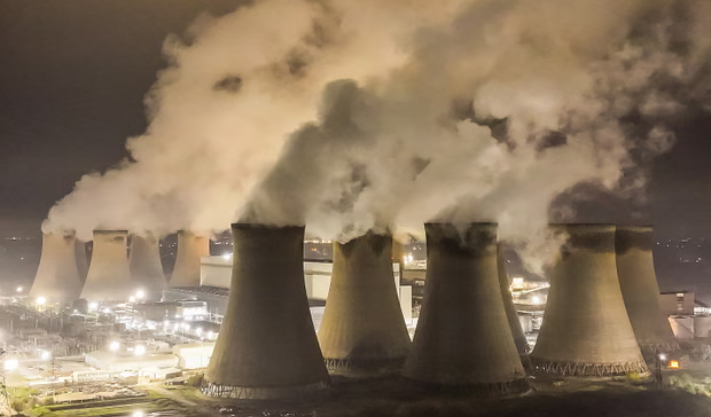
A Controversial Milestone in Renewable Energy Funding
A recent report from an independent think tank has brought renewed attention to the UK’s renewable energy policies, revealing that energy company Drax Group claimed a record £999 million in subsidies in 2025 for its biomass operations. The findings have sparked intense debate among policymakers, environmental advocates, and industry stakeholders, raising important questions about the role of biomass energy in the transition to a low-carbon economy. While subsidies are intended to accelerate the shift toward cleaner energy sources, critics argue that the scale of support received by Drax highlights potential flaws in how sustainability is defined and incentivized.
Table of Contents
ToggleUnderstanding Biomass Energy and Its Role
Biomass energy, which involves burning organic materials such as wood pellets to generate electricity, has long been classified as a renewable energy source under UK and EU frameworks. The rationale is that the carbon dioxide released during combustion is offset by the carbon absorbed by trees during their growth, theoretically creating a closed carbon cycle. Drax, which operates one of the largest power stations in the UK, has transitioned from coal to biomass over the past decade, positioning itself as a key player in the country’s decarbonization strategy.
However, this classification has been increasingly scrutinized. Critics argue that the carbon neutrality of biomass depends heavily on factors such as sourcing practices, transportation emissions, and the time required for forests to regrow. These complexities have led to growing skepticism about whether large-scale biomass operations truly deliver the environmental benefits they promise.
The Scale and Significance of the Subsidies
The reported £999 million in subsidies represents a significant portion of the UK’s renewable energy support mechanisms. These subsidies are primarily funded through levies on consumer energy bills, meaning that households and businesses indirectly contribute to supporting biomass energy. The scale of the funding underscores the importance of Drax within the UK’s energy mix, but it also raises concerns about cost-effectiveness and fairness.
Supporters of the subsidy framework argue that such investments are necessary to ensure energy security and accelerate the transition away from fossil fuels. By providing financial incentives, governments can encourage companies to adopt cleaner technologies and reduce carbon emissions. In this context, Drax’s biomass operations are seen as a bridge solution, helping to maintain stable energy supply while renewable infrastructure continues to develop.
Criticism from Environmental Groups and Think Tanks
The think tank’s report has amplified criticism from environmental groups, many of whom question whether biomass should continue to receive substantial public funding. One of the main concerns is the environmental impact of sourcing wood pellets, which are often imported from countries such as the United States and Canada. Critics argue that large-scale logging for biomass production can contribute to deforestation, biodiversity loss, and ecosystem disruption.
Additionally, the carbon accounting methods used to classify biomass as renewable have been challenged. While emissions from burning biomass are counted as zero at the point of combustion, the broader lifecycle emissions—including harvesting, processing, and transportation—are not always fully accounted for. This has led some experts to argue that biomass may be less climate-friendly than previously assumed.
Drax’s Position and Strategic Response
In response to ongoing criticism, Drax has consistently defended its operations, emphasizing its commitment to sustainability and innovation. The company has invested in carbon capture and storage (CCS) technologies, which aim to remove carbon dioxide from the atmosphere and store it underground. If successfully implemented at scale, this approach could transform biomass energy into a carbon-negative solution, potentially offsetting emissions from other sectors.
Drax also highlights its adherence to strict sourcing standards, stating that its wood pellets are derived from sustainably managed forests and residues rather than primary forest logging. The company argues that its operations support rural economies and contribute to responsible forest management practices.
Economic Implications and Energy Security
Beyond environmental considerations, the issue of subsidies has broader economic implications. The UK’s energy system relies on a diverse mix of sources to ensure reliability and resilience. Biomass plays a role in providing baseload power—electricity that is available consistently, regardless of weather conditions. This distinguishes it from intermittent renewable sources such as wind and solar, which depend on environmental factors.
From this perspective, subsidies for biomass can be seen as an investment in energy stability. However, critics argue that the same funds could be redirected toward expanding renewable technologies like offshore wind, battery storage, and green hydrogen, which may offer greater long-term benefits.
Policy Debates and Future Directions
The findings of the think tank report are likely to influence ongoing policy debates in the UK. As the government reviews its energy strategy and climate commitments, questions about the role of biomass and the allocation of subsidies will take center stage. Policymakers must balance competing priorities, including reducing emissions, maintaining energy security, and minimizing costs for consumers.
There is growing pressure to reassess how renewable energy is defined and supported. Some experts advocate for stricter criteria for biomass eligibility, ensuring that only genuinely sustainable practices receive public funding. Others call for a gradual phase-out of subsidies for biomass in favor of emerging technologies that offer clearer environmental benefits.
Public Perception and Accountability
The scale of subsidies received by Drax has also brought the issue into the public spotlight. As consumers become more aware of how their energy bills are used, there is increasing demand for transparency and accountability. Questions about whether public funds are being spent effectively—and in alignment with climate goals—are becoming more prominent.
This heightened scrutiny reflects a broader shift in societal expectations. Stakeholders are no longer satisfied with broad claims of sustainability; they seek evidence-based assurances that energy solutions deliver tangible environmental outcomes. Companies and policymakers alike must respond to this demand by providing clear, credible information.
Balancing Transition and Transformation
The controversy surrounding Drax highlights a fundamental challenge in the energy transition: balancing short-term needs with long-term goals. While biomass may serve as a transitional solution, its role must be carefully evaluated to ensure that it does not hinder progress toward truly sustainable energy systems.
Achieving net-zero emissions requires a comprehensive approach that integrates multiple technologies and strategies. Biomass, carbon capture, renewable energy, and energy efficiency all have roles to play, but their relative importance may evolve over time. Strategic decision-making will be crucial in determining the most effective path forward.
Conclusion: A Defining Moment for Energy Policy
The revelation that Drax received a record £999 million in subsidies for biomass operations in 2025 marks a defining moment in the UK’s energy policy landscape. It underscores the complexities of transitioning to a low-carbon economy and the challenges of aligning financial incentives with environmental objectives.
As debates continue, the focus will be on ensuring that energy policies deliver both sustainability and value for money. The outcome of these discussions will shape the future of renewable energy in the UK, influencing how resources are allocated and how progress toward climate goals is measured. In this evolving landscape, transparency, accountability, and innovation will be key to building a more sustainable and resilient energy system.