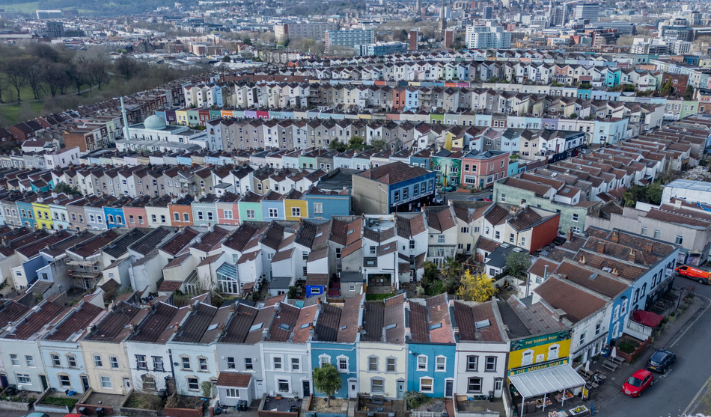
UK House Price Growth Slows as Middle East Conflict Affects Housing Market
House prices in the UK dropped for the second month in a row in April, as rising uncertainty caused by the conflict in the Middle East began to affect the housing market. According to mortgage lender Halifax, the growth in house prices has slowed sharply, with many buyers becoming more cautious because of higher borrowing costs and worries about the economy.
Halifax reported that the average price of a UK home fell by 0.1% in April, bringing the average property value to £299,313. This came after a bigger monthly fall of 0.5% in March. The lender also said that annual house price growth slowed from 0.8% to 0.4%, meaning prices are still slightly higher than last year, but the pace of growth has weakened considerably.
The slowdown comes after a strong beginning to the year. Earlier in 2026, the housing market had shown signs of recovery, with prices increasing by 0.8% in January and another 0.3% in February. At that time, Halifax expected annual house price growth to reach 1.2%.
However, the economic situation changed quickly after tensions in the Middle East increased. The conflict pushed global energy prices higher, creating fresh concerns about inflation and interest rates. Rising inflation has made financial markets expect that interest rates could stay higher for longer, which has directly affected mortgage costs in the UK.
Amanda Bryden, Head of Mortgages at Halifax, said recent global events had created greater uncertainty for the housing market. She explained that higher energy prices have increased inflation expectations, forcing markets to rethink future interest rate decisions. As a result, borrowing costs have risen for many homebuyers.
Bryden said this situation has made many households more careful about making major financial decisions. With living costs remaining high, buyers are thinking more carefully before moving home or taking on large mortgages.
Mortgage rates have increased significantly in recent months. According to financial data company Moneyfacts, the average two-year fixed mortgage rate reached 5.77% this week, compared with 4.83% at the beginning of March. The average five-year fixed mortgage rate also rose to 5.69%, up from 4.95%.
Higher mortgage rates make monthly repayments more expensive, reducing affordability for many buyers. This has slowed demand in parts of the market, especially among first-time buyers and families looking to upgrade to larger homes.
Property experts say there is now a growing gap between what sellers expect and what buyers are willing to pay. Chris Hodgkinson, Managing Director of House Buyer Bureau, said many sellers are still setting prices based on earlier market optimism rather than current conditions.
He explained that although buyer demand still exists, people are now far more sensitive to prices because of the uncertain economic climate. Homes that are priced too high are remaining on the market for longer periods, forcing sellers to reduce their asking prices later.
Hodgkinson added that sellers who fail to adjust quickly to changing market conditions may struggle to attract serious buyers. As borrowing becomes more expensive, buyers are paying closer attention to value for money and affordability.
The housing market has become increasingly difficult to predict because of the wider economic uncertainty caused by the Middle East conflict. Rising energy costs are affecting businesses and households across the UK, while concerns over inflation continue to influence financial markets.
Despite Halifax reporting weaker house prices, another major lender, Nationwide, recently showed a very different picture of the housing market. Last week, Nationwide surprised economists and estate agents by announcing that UK house prices had risen at the fastest annual rate in 11 months.
Nationwide said its data showed house prices increased by 3% in April compared with the same month last year, up from 2.2% growth in March. According to Nationwide, the average UK property is now worth £278,880.
Unlike Halifax, Nationwide also reported a monthly increase in prices. The building society recorded a 0.4% rise in April following a 0.9% increase in March. Economists had expected prices to fall by 0.3%, making the results stronger than predicted.
The difference between Halifax and Nationwide figures is mainly because the two lenders use different methods to measure housing market activity. Halifax data is based on mortgages approved through Lloyds Banking Group, while Nationwide uses its own lending data. Because they track different customers and regions, their monthly results can vary.
Even with mixed data, experts agree that the housing market is entering a more uncertain period. High mortgage rates, rising living costs, and global economic tensions are making both buyers and sellers more cautious.
Some analysts believe the market could remain weak in the coming months if inflation stays high and interest rates continue rising. Others argue that strong employment levels and limited housing supply could still support prices despite current challenges.
The Bank of England’s future decisions on interest rates will likely play a major role in determining the direction of the housing market. If inflation remains stubbornly high because of rising energy costs, the central bank may decide to keep rates elevated for longer. This would continue putting pressure on mortgage affordability and housing demand.
For now, many buyers are delaying decisions while they wait for more stability in the economy. Sellers, meanwhile, may need to become more realistic about pricing if they want to secure sales in a slower market.
The UK housing market began 2026 with strong momentum, but global political tensions and rising financial pressures have quickly changed the outlook. While some lenders still report price growth, the overall market appears to be slowing as households face increasing economic uncertainty.
Whether house prices continue to fall or recover later this year will depend largely on inflation, mortgage rates, and the wider global economy. For both buyers and sellers, the months ahead are expected to remain challenging as the market adjusts to a rapidly changing financial environment.
Also Read:-
Hottest Bikini Models You Need to Follow Right Now
10 High-Protein Foods That Have More Protein Than Steak
Body as a Masterpiece: Nipples, Skeletons and Tattoos