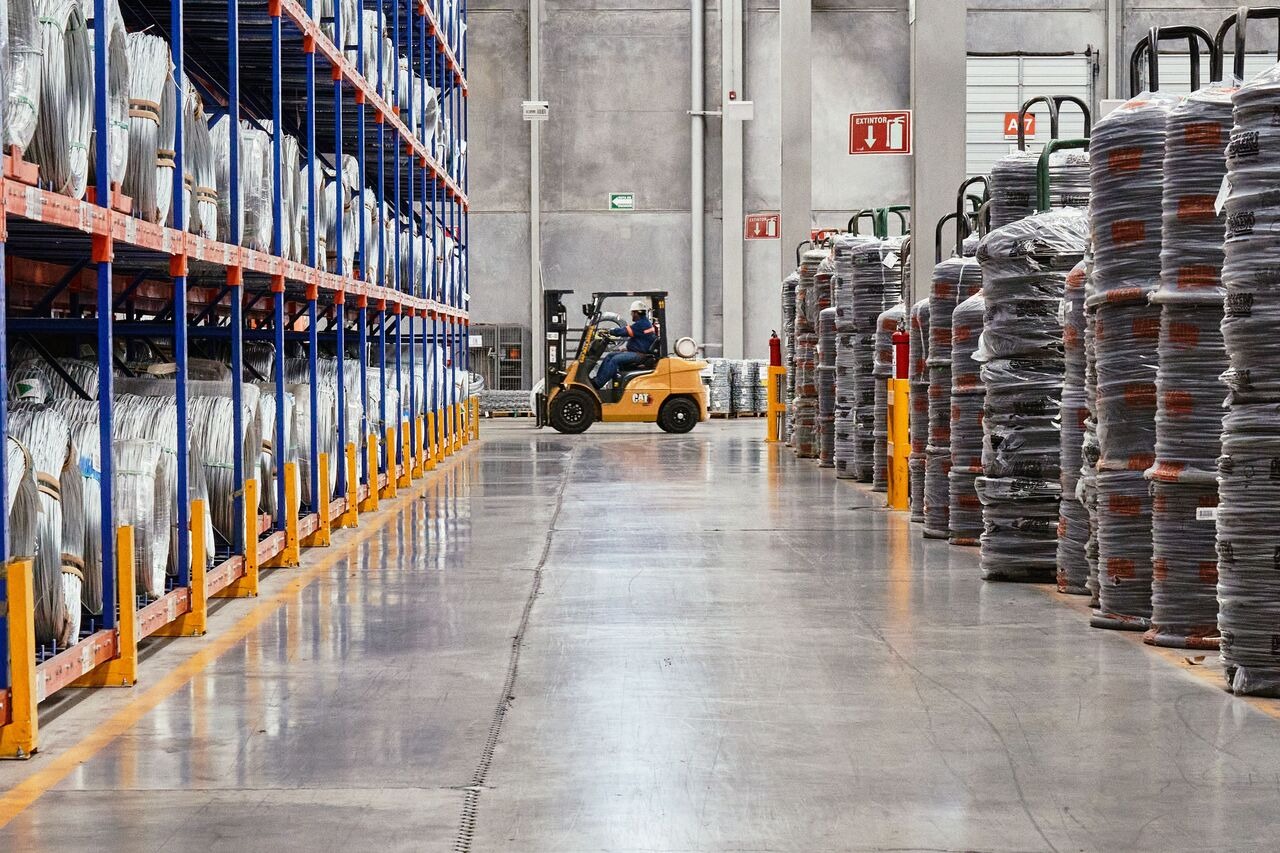
If you run your own warehouse, then you will know it can be tricky to keep everything running smoothly. Warehouses are busy environments where you always have different people walking through as well as various machinery moving about. Forklift trucks move between aisles, employees cross designated traffic routes, and loading and unloading can take place throughout the day. Without the right safety measures in place, there is always the potential for collisions, damage and disruption.
Having the right indoor barriers for warehouse traffic control is crucial, as Indoor safety barriers provide a physical layer of protection between different areas of a facility. But when it comes to deciding the right ones, there are various factors to consider, such as the available space in the facility, the amount of traffic that passes through, and the risks involved – the last thing you want is for an accident to occur.
Below, we look into choosing the right indoor barriers for warehouse traffic control. Keep on reading for different tips and tricks when choosing the right solution for you – just make sure you don’t put this off, as it’s important to get it right.
Assess the Risks within the Warehouse
The first step should be assessing how people and vehicles move through the facility. Some areas naturally present a greater collision risk than others, particularly where forklift routes intersect with pedestrian walkways.
Pay particular attention to blind corners, loading areas, entrances, aisle ends and narrow sections of the warehouse. Locations where vehicles regularly reverse or turn should also be considered higher risk.
It is equally important to identify valuable or sensitive infrastructure. Structural columns, electrical cabinets, racking, machinery and control panels can all be vulnerable to vehicle impacts. Damage to these areas could result in expensive repairs as well as significant operational downtime.
Separate Pedestrian and Vehicle Routes
When you run a warehouse, it’s important you pay attention to pedestrian routes and vehicle routes and ensure they don’t interlink – warehouse traffic management should be keeping pedestrians separated from moving vehicles wherever possible.
Floor markings and signs are useful for showing designated routes, but they cannot physically prevent a forklift or pallet truck from entering a pedestrian area. In busy sections of a warehouse, pedestrian guardrails can create a more obvious and substantial division.
Crossing points also need careful consideration. Employees should be able to move between different areas without unexpectedly entering vehicle routes. Gates and clearly identified crossings can help direct pedestrians towards safer locations.
Choose Barriers Based on Impact Risk
Not every section of a warehouse requires the same level of protection. A barrier surrounding sensitive machinery on a busy forklift route, for example, will have different requirements from a guardrail beside a low-traffic pedestrian walkway.
Consider the type and weight of vehicles operating nearby, along with their typical speeds. These factors affect the amount of energy generated during an impact.
Protect Columns, Racking and Equipment
As you can imagine, all warehouses are different, with different infrastructure in place. A good example of this is different types of structural columns. Forklift drivers may need to manoeuvre around them regularly, increasing the possibility of accidental contact. Installing suitable column protection provides a buffer between vehicles and the structure itself. Racking ends can also benefit from additional protection, particularly where they face busy traffic routes. Likewise, barriers can be installed around electrical cabinets, conveyors, control systems, charging points and expensive machinery.
Consider Installation and Available Space
The amount of space you have in your warehouse will be a big factor in choosing the right solutions for your warehouse traffic control. With this in mind, barriers should not make traffic routes unnecessarily narrow or interfere with vehicle turning circles. This is especially relevant around corners and aisle ends where forklift operators need additional manoeuvring space. Poorly positioned barriers can potentially introduce new collision points rather than reducing risk.
From an installation standpoint, managers should check the condition and depth of concrete floors before installing heavy-duty systems, particularly because impact forces can be transferred through the barrier’s fixings. Underground electrical cables, drainage and other services should also be identified before drilling takes place. You could look into artificial intelligence as a way to help you choose the right options.
Look Beyond the Initial Purchase Price
For any purchase for a business, the cost plays a big role in what you opt for. However, safety is a priority and shouldn’t be neglected. The cheapest option may not necessarily offer the best value in the long term. Consider how durable the barrier is, the level of protection it provides, and how much maintenance it is likely to require. A barrier that regularly needs repairing or replacing following minor impacts could ultimately cost significantly more than a higher-quality alternative.
What indoor barrier solutions do you think you are going to opt for to help manage warehouse traffic control? Which of the above tips did you find most useful? Is there anything missing in our guide that you think we should add? Let us know in the comment box below. We look forward to hearing from you.
Also Read:-
What Are the Latest Fashion Trends in London?
What Are the Biggest Energy Business Opportunities in the UK?
What Drives the Economy of Britain? Industries, Trade & GDP