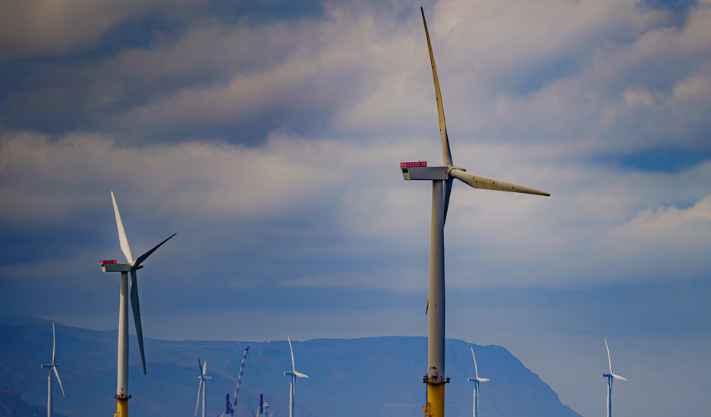
UK Moves Older Wind and Solar Farms to Fixed-Price Deals to Curb Price Shocks
The United Kingdom is making a big change in how its energy market works. The government plans to move older wind and solar farms onto fixed-price contracts. This means these energy producers will sell electricity at a set price instead of changing market prices. The main goal is to protect homes and businesses from sudden rises in electricity bills.
In recent years, energy prices in the UK have gone up and down a lot. This is mostly because global gas prices have been unstable. Even though renewable energy like wind and solar is cheaper, electricity prices are still affected by gas. By using fixed prices for older renewable projects, the government hopes to make bills more stable, support clean energy, and reduce the use of fossil fuels.
Why this change is needed
The UK’s electricity market has a basic problem. Prices are still mainly set by gas-powered plants. This happens because of a system called “marginal pricing.” In this system, the most expensive energy source needed to meet demand sets the price for all electricity.
So, even if wind and solar farms produce cheap power, people may still pay high prices if gas is expensive. This has become a bigger issue due to global tensions and supply problems, which have pushed electricity prices very high at times.
Many older renewable energy projects were built under older support systems. These projects can sell electricity at market prices and also receive extra payments. When gas prices rise, these companies can earn very high profits. While this is good for the companies, it has raised concerns about fairness, as consumers still face high energy bills.
How the fixed-price system works
To solve this problem, the government wants to move older wind and solar farms to fixed-price contracts called “contracts for difference” (CfDs).
Under this system, a fixed price for electricity is agreed in advance. If the market price falls below this level, the government pays the difference to the energy producer. If the market price goes above the set level, the producer pays back the extra money.
This system is not new. It has already been used for newer renewable energy projects in the UK since 2017. It has helped reduce costs and give stable income to developers. Now, the government wants to use the same system for older projects.
Older renewable farms produce about one-third of the UK’s electricity. So, bringing them into fixed-price contracts could have a big impact on the whole energy system.
Benefits for consumers
One of the biggest advantages of this plan is more stable energy bills. By reducing the link between electricity prices and gas prices, consumers will be less affected by sudden price increases.
Experts say the change could save between £4 billion and £10 billion each year when energy prices are high. These savings come from stopping older renewable companies from making extra profits during price spikes and instead passing that value back to consumers.
Fixed-price contracts also make the system more predictable. Energy companies will have steady income, which helps them plan future investments. At the same time, consumers will have clearer and more stable pricing.
Government support and incentives
To make this plan work, the government will likely offer incentives to energy companies. These could include tax benefits for companies that agree to switch to fixed-price contracts.
At the same time, companies that choose to stay with market pricing may face higher windfall taxes. This creates both encouragement and pressure to join the new system.
The government is trying to balance two things. It wants to keep the energy sector attractive for investment while also addressing public concerns about high energy bills and company profits.
There are also plans to change existing subsidies and possibly increase charges on electricity generators to support the new system.
Part of a bigger energy plan
This policy is just one part of a larger strategy to change the UK’s energy system. The government wants to reduce its dependence on fossil fuels, not just for environmental reasons but also for economic and security reasons.
Leaders have said that relying on fossil fuels is no longer safe or stable. Instead, the focus is on producing clean energy within the country.
The UK is also working to increase renewable energy capacity. Plans include building more solar and wind farms, making it easier to get planning approval, and supporting new technologies like electric vehicles and heat pumps.
The country aims to have a nearly zero-carbon electricity system by 2030. Recent renewable energy projects have already shown that wind and solar can produce electricity at lower costs than new gas plants.
Challenges and concerns
Even though the plan has many benefits, it also faces challenges. Some energy companies are worried about how the changes will affect investor confidence. Changing existing contracts could create uncertainty, especially if companies feel the new terms are less favorable.
Another issue is whether companies will agree to join the scheme. While incentives may help, some companies might prefer to keep selling electricity at market prices, especially when prices are high.
There are also practical challenges. The government will need to negotiate new contracts, update regulations, and set up financial systems. All of this must be done carefully to avoid disrupting the energy market.
Moving toward stable prices
Overall, this policy is a practical step to fix a complex problem. Renewable energy has made electricity cheaper to produce, but the market system has not fully adjusted to this change.
By introducing fixed prices for older renewable projects, the UK hopes to make sure that the benefits of cheap, clean energy reach consumers. It also aims to reduce the impact of unpredictable fossil fuel prices.
This change shows a shift in thinking. It is not just about producing clean energy, but also about how that energy is priced and delivered. The UK is trying to create a system that is both environmentally friendly and fair for consumers.
Conclusion
The UK’s decision to move older wind and solar farms to fixed-price contracts is an important step in its energy transition. The policy aims to lower price volatility, make energy bills more stable, and create a fairer system.
While there are still challenges to solve, the plan reflects a growing understanding that clean energy must also be affordable. If successful, this approach could become a model for other countries facing similar energy problems in a changing global market.
Also Read:-
Lyrid Meteor Shower Lights Up Spring Skies Again
Green MP: Labour Misreads Working-Class Greyhound Views
Drax gets £999M subsidies for biomass in 2025