
Feature story by The UK Times
The rules that once governed global business are changing at extraordinary speed. Economic shocks, geopolitical tensions, technological disruption, and the rapid rise of artificial intelligence have transformed the landscape in which modern executives operate. For business leaders, uncertainty is no longer an occasional challenge. It has become a constant reality.
Against this backdrop, researcher and business strategist Aldin Celovic has put forward a new framework designed to help organizations survive and thrive in periods of instability. Through his latest manuscript, Fixing Uncertain, Strategic Failure, or Collapse During Unexpected Crises via Leadership Cycle, Celovic explores how leadership itself must evolve to meet the demands of an increasingly unpredictable world.
Developed within the academic field of international finance and macroeconomic forecasting under JEL classification F47, the manuscript goes beyond theory to examine one of the defining questions facing businesses today: how can leaders make sound decisions when traditional models are no longer enough?
For Celovic, the answer lies in adaptability, perspective, and a willingness to rethink the foundations of executive leadership.
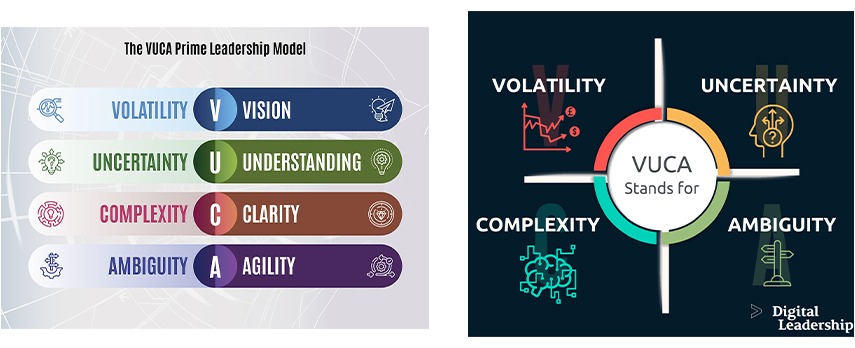
Digital leadership VUCA World Disruptive Leadership Institute
A World Defined by Uncertainty
The modern business environment has become increasingly difficult to navigate. Inflationary pressures, shifting supply chains, regulatory changes, and digital transformation have created conditions in which certainty is often impossible.
As a Senior Researcher and Specialist working with international projects within the Horizon Europe programme, Celovic has spent years analysing the forces reshaping business and finance. His latest research argues that many organisations continue to rely on leadership structures designed for a more stable era.
Traditional approaches such as transformational leadership, transactional management, and hierarchical decision making remain valuable, but they often struggle to respond to fast moving crises and unexpected disruptions.
The manuscript proposes that leaders must embrace a more dynamic model, one built around continuous observation, intervention, and reassessment.
At the centre of this thinking is what Celovic calls the Leadership Cycle.
The Leadership Cycle: A New Framework for Executive Decision Making
Rather than presenting leadership as a sequence of fixed steps, the Leadership Cycle operates as an ongoing process. Executives analyse changing circumstances, intervene when necessary, and then step back to evaluate the effectiveness of their actions.
The process repeats continuously, allowing leaders to adapt as conditions evolve.
According to Celovic, this model reflects the realities of contemporary business far more accurately than static management theories. Markets change. Technologies advance. Consumer expectations shift. Effective leadership depends on an organisation’s ability to learn and respond in real time.
The approach also challenges executives to move beyond operational thinking and adopt a broader strategic perspective.
This idea becomes particularly important in periods of crisis, when pressure often encourages leaders to focus exclusively on immediate problems rather than long term solutions.
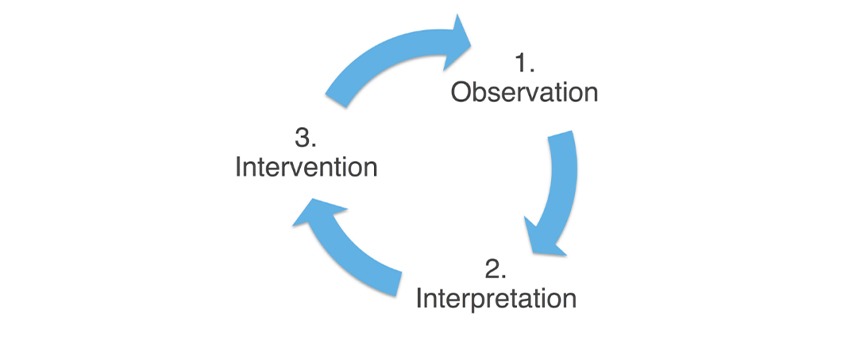
Iterative decision-making as a practice of adaptive leadership
The Importance of the Balcony Perspective
Among the manuscript’s most original concepts is the idea of the balcony perspective, a leadership tool that encourages decision makers to temporarily detach themselves from day to day pressures.
From the balcony, leaders gain a wider view of their organisations. They can identify recurring patterns, understand power dynamics, and recognise risks that may be invisible from the operational front line.
Celovic believes that many strategic failures occur because organisations become trapped in constant activity without taking the time to reflect on the larger picture.
The principle draws on contemporary adaptive leadership theories and aligns with broader discussions taking place within the international business community. Institutions such as Harvard Business Review and Warwick Business School have increasingly highlighted the need for leaders who can navigate complexity while maintaining organisational resilience.
For businesses operating across international markets, the ability to step back and reassess may prove as valuable as technical expertise itself.
Reinventing Leadership for the Digital Era
The manuscript arrives at a pivotal moment for global commerce. Artificial intelligence is reshaping industries, remote collaboration is transforming workplaces, and businesses are being asked to innovate faster than ever before.
Celovic argues that future leaders will need to master a broader range of skills than previous generations. Strategic planning must be combined with emotional intelligence, creativity, and the capacity to remain calm during periods of disruption.
His research points towards a new leadership profile defined by adaptability, transparency, and resilience.
Rather than imposing rigid structures, tomorrow’s executives will need to empower teams, encourage experimentation, and cultivate cultures capable of learning from failure.
The manuscript also introduces the possibility that entirely new categories of leadership may emerge in response to these challenges, including disruptive leadership and specialised DBA leadership models designed for an increasingly complex global economy.
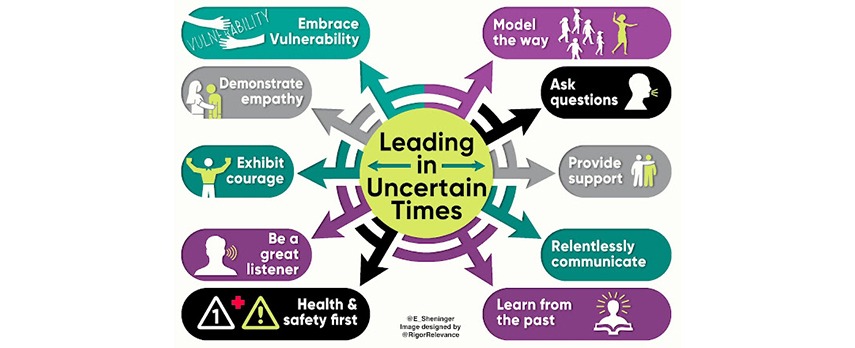
A Principal’s Reflections: Leading in Uncertain Times
Research With Global Relevance
Although written from an academic perspective, Celovic’s work extends far beyond universities and research centres. Its findings speak directly to entrepreneurs, executives, policy makers, and professionals seeking to strengthen their leadership capabilities.
The manuscript emphasises the importance of original thinking and evidence based decision making at a time when businesses are flooded with information but often struggle to identify meaningful direction.
Throughout his career, Celovic has contributed to projects spanning international finance, sustainable development, executive education, and innovation. His work reflects a growing recognition that leadership in the twenty first century must bridge disciplines rather than operate within traditional boundaries.
Further information about his previous research and professional activities can be explored through The Worlds Times interview archive.
Conclusion
For Aldin Celovic, uncertainty is not simply a challenge to overcome. It is the defining condition of modern leadership. His Leadership Cycle framework offers an alternative to outdated management models by encouraging executives to analyse deeply, act decisively, and constantly reassess the world around them.
As businesses across Britain and beyond prepare for the next wave of economic and technological change, the ability to adapt may become the most important leadership quality of all.
The future, Celovic suggests, will belong not to those who resist uncertainty, but to those who learn how to lead through it.
Connect with Aldin:
https://www.linkedin.com/in/aldincelovic/
Also Read:-
Jens Sørensen: 50 Years Transforming the Global Auto Industry
James Tulloch Transforming Healthcare
Elaine Hirschl Ellis: Preserving the Legacy of the Arts