UK’s Biggest Student Housing Provider Hit by Fall in International Enrolment
The UK’s biggest student housing company, Unite Group, is facing problems after a drop in international students coming to Britain. Because of weaker demand, the company has lowered its profit forecast for the third time in four months and reduced rents in some cities.
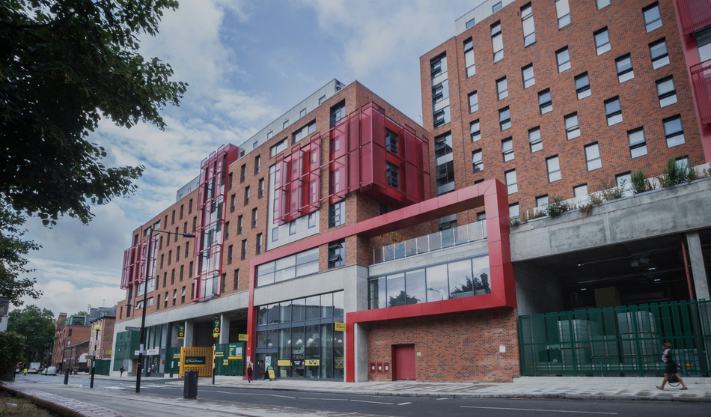
The company’s shares fell by more than 12%, reaching their lowest level since early 2015. Unite Group, which is listed on the FTSE 250, said it would slow down new building projects. After completing Hawthorne House in Stratford, a new building with 719 beds expected to open in June, it plans to build much less student housing than before.
So far, only 68% of Unite’s rooms are booked for the next academic year starting in September. This is lower than usual and shows softer demand, especially from international students. As a result, the company is now focusing more on cities that have “high tariff universities.” These are universities that require high A-level results and more UCAS points for entry. Unite believes that such universities are more likely to attract stable numbers of students.
The company is also selling some of its properties and cutting costs. It recently sold a 571-bed property at St Pancras Way in London for £186 million. The buyer was the Unite UK Student Accommodation Fund, a joint venture between Unite Group and GIC, Singapore’s sovereign wealth fund. The sale will help Unite raise cash and strengthen its finances.
Karan Khanna, the company’s chief operating officer, said the most challenging cities at the moment are Nottingham, Leicester, and Sheffield. In these locations, Unite has cut rents and shortened tenancy contracts from 51 weeks to 44 weeks. Similar changes have also been made in Bristol and at Burnet Court in Edinburgh. In Edinburgh, room prices start at about £250 per week. Even when the weekly rent stays the same, shorter contracts mean students pay less overall.
Joe Lister, Unite’s chief executive, said he still believes that UK higher education remains popular worldwide. However, he admitted that changes in the market are creating pressure. More UK students are choosing to live at home, and there has been a decline in international postgraduate students. He said that adjusting the company’s property portfolio to these changes will take time.
For many years, student accommodation was one of the strongest areas in the UK commercial property market. There is still a shortage of affordable housing in many parts of the country. Big investors, including private equity firms such as Blackstone, were attracted to the sector. However, the recent fall in overseas student applications has affected the market.
British universities have reported that the number of international students starting postgraduate courses fell by 6% this September. This was the second year in a row that numbers have declined. Last year, the UK government introduced a new levy on international students and reduced the number of sponsored study visas granted. These policy changes have also affected demand.
Recently, Unite completed the acquisition of Empiric Student Property. This deal added 7,700 beds across 68 buildings in 22 cities to its portfolio. Despite the expansion, the company warned that performance in the 2026-27 academic year is likely to be at the lower end of expectations. It expects occupancy rates between 93% and 96% and rental growth of only 2% to 3%. This would lead to income growth of zero to 2%, compared with earlier guidance of up to 4%.
Unite is planning to sell between £300 million and £400 million worth of property each year, starting this year. As a developer, it has already cancelled some projects. It dropped a £147 million development in Paddington that would have provided 605 beds. It also delayed its Freestone Island project in Bristol, which was planned to have 500 beds. The company is now reviewing all the land it owns, which could allow for 2,400 more beds. It may sell some of these sites or enter joint ventures to reduce risk.
Matthew Saperia, an analyst at Peel Hunt, said that returning Unite to strong growth will not be easy. He warned that the company still faces significant challenges and execution risks.
Unite’s chief financial officer, Michael Burt, said that although new student housing supply increased last year, it is still only about half of what it was before the pandemic. This suggests that while demand has weakened, new supply is also limited.
Overall, the drop in international students has created pressure for the UK’s largest student housing provider. While Unite remains confident in the long-term appeal of UK universities, it is now focusing on cutting costs, selling assets, and targeting stronger locations as it works to stabilise its business.
Published: 25th February 2026
For more article like this please follow our social media Twitter, Linkedin & Instagram
Also Read:
When Private Separation becomes a potential Leadership Issue
Business Happiness Through Real-World Alignment
High energy costs threaten UK manufacturing business growth