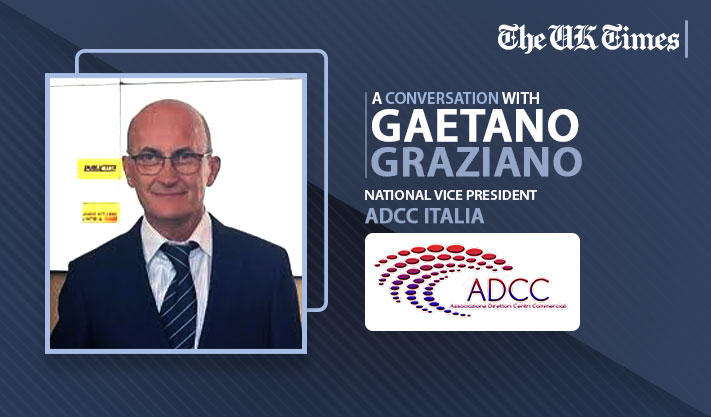
Interview with Gaetano Graziano, National Vice President, ADCC Italia
INTRODUCTION
The transformation of shopping centers and retail ecosystems is reshaping cities in Italy and across Europe. We speak with Gaetano Graziano, author of the books “The Secrets of Shopping Centers” and “Supermarkets: Past, Present, Future”, National Vice President of ADCC Italia – the Association of Shopping Center Directors. ADCC Italia is a non-profit organization that promotes innovation, transparency, and sustainability in shopping center management.
Gaetano Graziano is an established author and thought leader in the sector, recognized for his expertise in retail innovation and the use of AI in retail. He has also contributed to major urban regeneration and mixed-use development projects, positioning shopping centers as strategic assets for social, economic, and cultural growth.
In this interview, he shares his vision on how shopping centers are evolving into multifunctional urban hubs, where the integration of commerce, culture, leisure, and sustainability is essential for the future of cities.
THE EVOLUTION OF SHOPPING CENTER LEADERSHIP
The UK Times: How has the role of a shopping center director evolved in Italy, and what skills are now required to lead modern commercial structures?
Gaetano Graziano:
The role of the shopping center director has shifted from a predominantly operational function to a strategic leadership position. In the past, directors focused on leasing, facility management, and daily coordination. Today, they must understand consumer behavior, retail innovation, sustainability, and community engagement.
Shopping centers are no longer just retail spaces. They integrate culture, entertainment, services, and social interactions. This evolution requires strong analytical skills, knowledge of omnichannel strategies, and expertise in placemaking and stakeholder management. Communication, negotiation, emotional intelligence, and change management are also critical. ADCC Italia supports professionals with training programs, research, and continuous development to navigate this transformation effectively.
TRANSFORMING RETAIL AND SUPERMARKETS
The UK Times: In your writings, you analyze the evolution of retail from supermarkets to shopping centers. What major changes are shaping the future of retail?
Gaetano Graziano:
Retail is undergoing a profound transformation. Supermarkets are evolving into integrated service platforms, supported by technology that improves logistics, efficiency, and consumer behavior analysis. Consumers now expect seamless experiences across physical and digital channels.
Shopping centers are undergoing an even deeper shift. The traditional transactional model is being replaced by ecosystems focused on experience, services, and social value. Tenant mixes increasingly emphasize food, entertainment, wellness, and community-oriented activities. Sustainability has become a core principle, influencing energy efficiency, social responsibility, and urban regeneration strategies. Today, shopping centers function as multifunctional urban hubs where commerce, culture, residences, and workplaces coexist.
ADCC ITALIA’S ROLE IN INNOVATION
The UK Times: How does ADCC Italia help Italian shopping centers face current and future challenges?
Gaetano Graziano:
ADCC Italia serves as a national platform for knowledge exchange, professional growth, and institutional dialogue. We provide shopping center directors with the tools they need to manage digital transformation, sustainable retail practices, and evolving consumer expectations through training programs and workshops.
We also conduct industry research to offer updated market insights and promote collaboration among directors, property owners, institutional partners, and stakeholders. By strengthening leadership within shopping centers, we support a retail model that is innovative, transparent, and aligned with community needs.
URBAN REGENERATION AND MIXED-USE DEVELOPMENT
The UK Times: Are you currently involved in urban regeneration projects, and why are mixed-use models essential for the future of urban retail?
Gaetano Graziano:
Yes, I am currently overseeing the Botteghelle project in Naples, covering approximately 237,000 square meters. This project demonstrates how former industrial and railway areas can be transformed into vibrant districts where retail, residences, green spaces, dining, gyms, and cultural activities coexist.
Mixed-use development ensures economic stability, diversified footfall, and long-term urban resilience. These projects respond to evolving urban needs, reduce land consumption, reclaim abandoned areas, and promote environmentally responsible growth. Urban regeneration and sustainable retail models are essential for the future of cities.
AI IN RETAIL AND DIGITAL ANALYTICS
The UK Times: What impact does AI in retail have on shopping center management?
Gaetano Graziano:
Artificial intelligence is transforming shopping center management by improving operational efficiency and decision-making accuracy. Predictive analytics help analyze visitor behavior, footfall trends, and traffic fluctuations. Digital tools enable personalized communication, while automation optimizes energy usage, safety, and facility management.
Technology must be implemented responsibly, with transparency and respect for data privacy. AI should enhance human expertise rather than replace it. Continuous training and a culture of innovation are essential to fully leverage these tools.
PLACEMAKING AND THE FUTURE OF SHOPPING CENTERS
The UK Times: What is your vision for the future role of shopping centers in Italy?
Gaetano Graziano:
Shopping centers are evolving into multifunctional urban hubs that integrate commerce, culture, leisure, and community life. The future lies in sustainable retail, mixed-use development, digital innovation, and placemaking.
Shopping centers must enrich urban environments and improve quality of life. Directors will need to balance operational excellence with long-term strategic vision, ensuring that shopping centers remain relevant, inclusive, and socially valuable spaces.
This is the full translation. Let me know if there’s anything else you’d like to adjust!
THE EVOLUTION OF SHOPPING CENTER LEADERSHIP
The UK Times: How has the role of a shopping center director evolved in Italy, and what skills are now required to lead modern commercial structures?
Gaetano Graziano:
The role of the shopping center director has shifted from a primarily operational function to a strategic leadership position. In the past, directors focused on leasing, facility management, and daily coordination. Today, they must understand consumer behavior, retail innovation, sustainability, and community engagement.
Shopping centers are no longer just retail spaces. They integrate culture, entertainment, services, and social interaction. This evolution requires strong analytical skills, knowledge of omnichannel strategies, and expertise in placemaking and stakeholder management. Communication, negotiation, emotional intelligence, and change management are equally important. ADCC Italia supports professionals through training, research, and continuous development to navigate this transformation effectively.
TRANSFORMING RETAIL AND SUPERMARKETS
The UK Times: In your publications, you analyze the evolution of retail from supermarkets to shopping centers. What major changes are shaping the future of retail?
Gaetano Graziano:
Retail is undergoing a profound transformation. Supermarkets are evolving into integrated service platforms supported by technology that enhances logistics, efficiency, and customer behaviour analysis. Consumers now expect seamless experiences across physical and digital channels.
Shopping centers are experiencing an even deeper shift. The traditional transactional model is being replaced by ecosystems cantered on experience, services, and social value. Tenant mixes increasingly emphasize food, entertainment, wellness, and community-oriented activities. Sustainability has become a core principle, influencing energy efficiency, social responsibility, and urban regeneration strategies. Today, shopping centers function as multifunctional urban hubs where commerce, culture, residences, and workplaces coexist.
ADCC ITALIA’S ROLE IN INNOVATION
The UK Times: How does ADCC Italia help Italian shopping centers face current and future challenges?
Gaetano Graziano:
ADCC Italia serves as a national platform for knowledge exchange, professional growth, and institutional dialogue. We provide shopping center directors with the tools needed to manage digital transformation, sustainable retail practices, and evolving consumer expectations through training programs and workshops.
We also conduct industry research to offer updated market insights and promote collaboration among directors, property owners, institutional partners, and stakeholders. By strengthening leadership within shopping centers, we support a retail model that is innovative, transparent, and aligned with community needs.
URBAN REGENERATION AND MIXED-USE DEVELOPMENT
The UK Times: Are you currently involved in urban regeneration projects, and why are mixed-use models essential for the future of urban retail?
Gaetano Graziano:
Yes, I am currently overseeing the Botteghelle project in Naples, covering approximately 237,000 square meters. It demonstrates how former industrial and railway areas can be transformed into vibrant districts where retail, residences, green spaces, dining, gyms, and cultural activities coexist.
Mixed-use development ensures economic stability, diversified footfall, and long-term urban resilience. These projects respond to changing urban needs, reduce land consumption, reclaim abandoned areas, and promote environmentally responsible growth. Urban regeneration and sustainable retail models are essential for the future of cities.
AI IN RETAIL AND DIGITAL ANALYTICS
The UK Times: What impact does AI in retail have on shopping center management?
Gaetano Graziano:
Artificial Intelligence is transforming shopping center management by improving operational efficiency and decision-making accuracy. Predictive analytics help analyze visitor behavior, footfall trends, and traffic fluctuations. Digital tools enable personalized communication, while automation optimizes energy usage, safety, and facility management.
Technology must be implemented responsibly, with transparency and respect for data privacy. AI should enhance human expertise rather than replace it. Continuous training and a culture of innovation are essential to fully leverage these tools.
PLACEMAKING AND THE FUTURE OF SHOPPING CENTERS
The UK Times: What is your vision for the future role of shopping centers in Italy?
Gaetano Graziano:
Shopping centers are evolving into multifunctional urban hubs that integrate commerce, culture, leisure, and community life. The future lies in sustainable retail, mixed-use development, digital innovation, and placemaking.
Shopping centers must enrich urban environments and improve quality of life. Directors will need to balance operational excellence with long-term strategic vision, ensuring that centri commerciali remains relevant, inclusive, and socially valuable spaces.
LEARN MORE AND CONNECT
To learn more about ADCC Italia and its initiatives in shopping centers, retail innovation, and urban regeneration, visit: https://www.direttoricentricommerciali.com
To connect with Gaetano Graziano and follow his insights on retail, mixed-use development, and AI in retail, visit:
https://www.linkedin.com/in/gaetano-graziano-a1212a82/
CONCLUSION
Through leadership, innovation, and a strong commitment to sustainability, Gaetano Graziano and ADCC Italia are redefining the role of shopping centers in Italy. By integrating urban regeneration, mixed-use development, sustainable retail strategies, AI in retail, and placemaking, shopping centers are becoming vital engines of economic, social, and cultural transformation.
Also Read:
Michel Wichman on Success, Responsibility, and Lasting Impact
From Finance to Real Estate: The Journey of Seema Balwani
Dr. Sofica Bistriceanu: Leader in Healthcare & Research