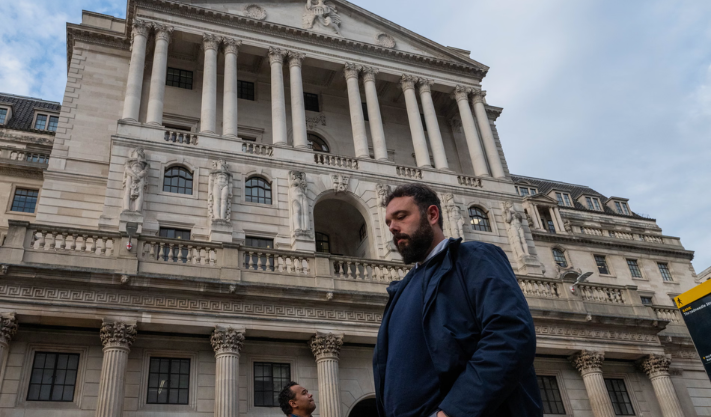
UK Borrowing Costs Fall to Lowest Level in Over a Year
UK borrowing costs have fallen to their lowest point in more than a year, as investors feel more confident about the country’s finances and expect further interest rate cuts.
The interest rate on 10-year UK government bonds, known as gilts, dropped to 4.34%, down from 4.41%. This is the lowest level since December 2024. Lower bond yields mean it is cheaper for the UK government to borrow money.
Investors were encouraged by signs that government finances are becoming more stable. They also believe that interest rates are likely to fall further in the coming months. These factors have reduced the risks of holding UK government debt, leading more investors to buy bonds and push yields down.
The UK has around £3 trillion in government debt, so even a small fall in borrowing costs can save a large amount of money. This development is good news for Chancellor Rachel Reeves. She worked hard ahead of November’s budget to improve the Treasury’s financial reserves and rebuild confidence among international investors. Many investors had previously been concerned about the UK’s ability to control its spending and balance its budget.
Before the budget, worries about government finances caused UK bond yields to rise sharply. At one point, yields hit their highest level since 2008. This showed how sensitive financial markets are to government decisions and highlighted the pressure Reeves faced when announcing tax increases and spending plans.
Reeves has said she plans to cut the UK’s spending deficit, which has remained above 5% of national income since the Covid-19 pandemic. Her goal is to reduce the deficit to below 2% by the 2029–30 financial year. Markets appear to be responding positively to this plan.
Bond yields also fell in several European countries on Wednesday. In the United States, borrowing costs stayed steady. US markets are facing uncertainty about interest rates because of a political standoff between Donald Trump and the head of the Federal Reserve, Jerome Powell.
In the UK, expectations of further interest rate cuts by the Bank of England are another key reason for the fall in borrowing costs. The Bank cut interest rates by 0.25 percentage points in December, bringing the base rate down to 3.75%.
Some analysts believe more cuts are likely. Jamie Searle, a strategist at Citigroup, said UK government bonds are attractive investments looking ahead to 2026. He said this is mainly because there is more room for interest rate cuts and because the government is managing new bond sales more carefully.
Before Christmas, financial markets expected the Bank of England to make only one more rate cut this year, which would have taken the base rate to 3.5%. However, recent data has changed those expectations.
Weaker employment figures and falling inflation have made investors think the Bank may cut rates further. Markets now believe that the Bank’s nine-member Monetary Policy Committee (MPC) could reduce rates by at least another 0.25 percentage points, bringing the rate down to 3.25% before 2027.
Alan Taylor, a member of the MPC, said in a speech in Singapore that a sharp slowdown in inflation this year could lead to several interest rate cuts. He said that if economic data continues to match his expectations, interest rates should keep moving lower.
Taylor explained that inflation is easing faster than many expected. Lower inflation reduces pressure on households and businesses, and it gives the Bank of England more freedom to lower borrowing costs.
New inflation figures due next week could show that inflation fell in December from November’s 3.2%. If confirmed, this would bring inflation closer to the Bank’s long-term target of 2%.
If inflation continues to fall and the economy remains weak, further interest rate cuts could follow. This would lower borrowing costs for the government, businesses, and households, and could help support economic growth in the coming years.
Published: 15th January 2026
For more article like this please follow our social media Twitter, Linkedin & Instagram
Also Read:
Luxury Real Estate in London: Demand Remains Strong
UK Not Fully Ready for War, Says Military Chief
How to Invest Smartly in the UK During Economic Uncertainty