DIY Shops Have a Strong Year as UK Housing Market Slows
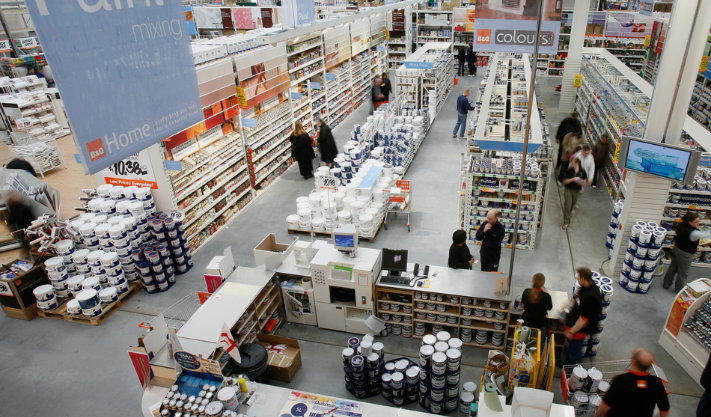
DIY and home improvement shops in the UK are doing very well this year, even though the property market is slowing down. As many people can no longer afford to move house or pay for big renovations, they are choosing cheaper DIY projects instead.
Products like paint, tiles, sofas, and other home improvement items are selling strongly. Many Britons are staying in their current homes and making small upgrades rather than buying new properties or starting expensive building work.
As a result, several home improvement retailers have seen big rises in their share prices on the London stock market. These companies include Kingfisher, which owns B&Q, as well as Topps Tiles, Wickes, and the sofa retailer DFS.
Some of these companies are seeing double-digit share price gains this year. In some cases, prices are up by as much as 56%. This shows strong confidence from investors, even while the wider housing market remains weak.
Kingfisher’s shares have risen by 26.5% this year, while Topps Tiles is up 13%. These are their best yearly performances since the pandemic. DFS has seen its share price rise by 23% so far this year, making it the company’s strongest year on the stock market since 2019.
Kingfisher, which also operates stores in France and Poland, has had a particularly strong performance in the UK. Because of this, the company has raised its profit forecast twice since September. This means it now expects to earn more than it previously thought.
The biggest success story is Wickes, one of the UK’s leading sellers of paint and DIY products. Wickes shares have jumped by 56% this year, making it the company’s best year since it was listed on the London Stock Exchange in 2021.
One reason DIY retailers are doing so well is the closure of Homebase, a major competitor. Homebase went into administration in November last year, which reduced competition in the DIY market. This helped remaining retailers attract more customers and increase sales.
The weak housing market has also played a major role. The UK’s largest mortgage lender, Halifax, reported that house prices showed no growth in November. It also said annual house price growth has slowed sharply to just 0.7%, down from 1.9% in the same month last year.
This slowdown in house prices shows that fewer people are buying homes. Many buyers are struggling with high interest rates, rising living costs, and tighter household budgets. Because of this, people are delaying home purchases and large renovation projects.
Instead, many homeowners are choosing low-cost DIY improvements to make their homes look better. These include painting rooms, changing tiles, buying new furniture, or making small repairs. These projects cost much less than moving house or carrying out major building work.
Experts say this shift explains why DIY shops are performing well. With less money available, consumers are focusing on affordable ways to refresh their homes rather than spending large sums.
The UK government’s recent budget measures may also support the DIY market. These measures include an increase in the minimum wage and changes to property taxes. As everyday activities such as eating out become more expensive, people may choose to spend more time at home.
Manjari Dhar, an analyst at RBC Capital Markets, said these changes could encourage people to stay in more often. This may lead to higher spending on home-related products, as families invest in making their living spaces more comfortable.
Data from the Office for National Statistics (ONS) supports this trend. The ONS shows that spending on household goods has often grown faster than overall retail sales this year. This suggests that consumers are prioritising home improvement items over other types of spending.
However, there are also risks to the DIY boom. ONS data shows that unemployment reached a four-year high of 5.1% in the three months to October. Higher unemployment could reduce consumer confidence and spending in the months ahead.
If more people lose their jobs or worry about job security, they may cut back even on DIY spending. This could slow the strong growth currently seen by home improvement retailers.
While DIY shops have enjoyed a very strong year, the same cannot be said for building materials suppliers. Companies that sell materials used in large construction and renovation projects have not performed as well on the stock market.
This suggests that many homeowners are putting major renovation plans on hold. Instead of extensions or full kitchen rebuilds, people are choosing smaller, simpler improvements.
For example, shares in Howden Joinery Group, a major kitchen supplier, have risen by only 5% this year. Meanwhile, Travis Perkins, a large supplier of building materials, has seen its shares fall by 11%.
These figures show a clear difference between small DIY projects and big renovation work. Consumers appear more comfortable spending money on paint, furniture, and minor updates than on large construction jobs.
There are also mixed signals in the housing market itself. Earlier this month, Halifax said that first-time buyers are now in the best position to buy a home in the past ten years.
According to Halifax, when house prices are compared to average incomes, affordability is at its strongest level since late 2015. This suggests that conditions may slowly improve for buyers over time.
However, other data tells a different story. The Royal Institute of Chartered Surveyors reported that demand from new buyers has fallen to its lowest level since 2023. This shows that many people are still reluctant or unable to buy homes.
High borrowing costs, economic uncertainty, and job concerns continue to weigh on potential buyers. As a result, many are choosing to wait rather than enter the property market.
For now, this situation continues to benefit DIY retailers. As long as people stay in their current homes, demand for affordable home improvement products is likely to remain strong.
In summary, while the UK property market is cooling, DIY and home improvement shops are enjoying one of their best years in recent times. With fewer people moving house and more choosing small upgrades, companies selling paint, tiles, and furniture are seeing strong sales and rising share prices.
However, ongoing economic challenges such as rising unemployment could affect future growth. The DIY boom may continue, but it remains closely tied to the financial health and confidence of UK consumers.
Published: 30th December 2025
For more article like this please follow our social media Twitter, Linkedin & Instagram
Also Read:
British Designers Embrace Tech and AI in Fashion Production
How Christmas Is Being Celebrated Across the United Kingdom
How UK Investors Are Diversifying Portfolios in 2025